
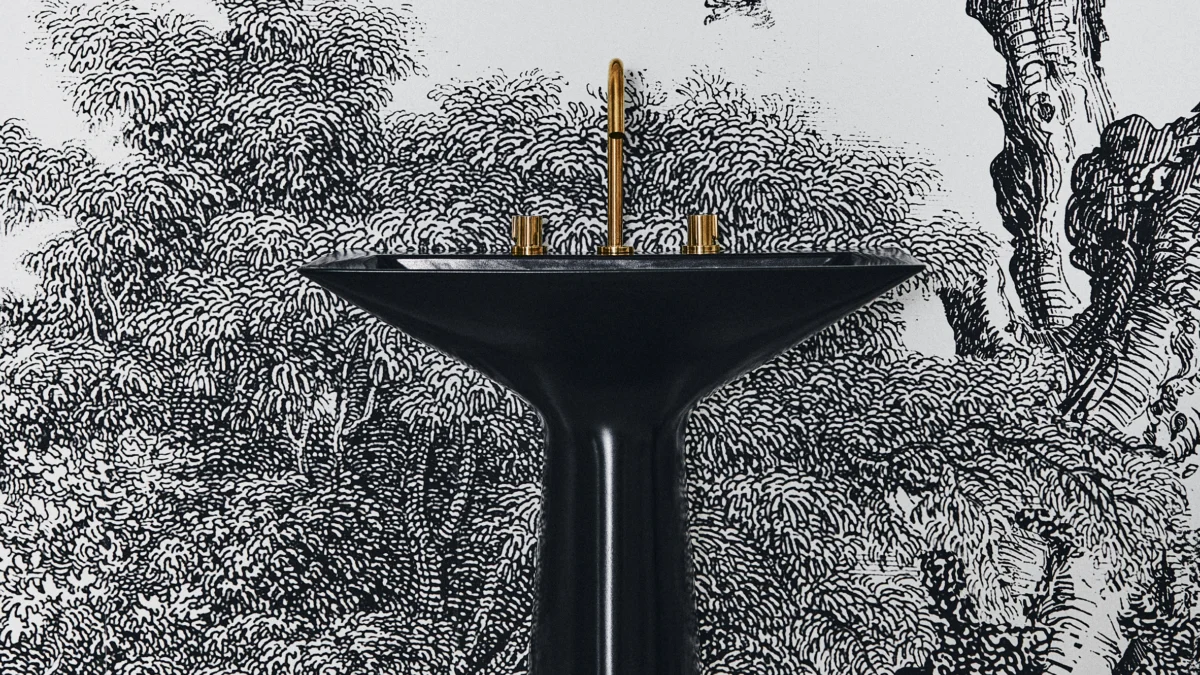
In the contemporary architectural landscape, the bathroom has transitioned from a purely utilitarian space to a sanctuary of design and personal expression. This shift toward "the bathroom as a living space" is perhaps best exemplified by the latest collaboration between renowned designer Roberto Palomba and the legacy bathroom brand Ideal Standard. Their latest offering, the Tipo-Z, is a freestanding pedestal basin that manages to bridge the chasm between mid-century nostalgia and hyper-modern minimalism, functioning as both a plumbing fixture and a piece of functional sculpture.
The Essence of Tipo-Z: A Sculptural Statement
At the heart of the Atelier Collections—Ideal Standard’s premium design-led portfolio—the Tipo-Z is designed to command attention. Rather than being tucked away or integrated into cabinetry, the Tipo-Z stands as a solitary, statuesque presence. Its defining feature is a continuous, tapered silhouette that seamlessly blends the basin and the pedestal into a single, unified form.
Constructed from fine fireclay, the basin benefits from the material’s unique ability to withstand high-heat firing, which allows for the creation of razor-sharp edges and extreme technical precision. This material choice is not merely aesthetic; it is a testament to the durability and structural integrity required for a centerpiece that is meant to last for decades. Available in a monochromatic palette of either Glossy White or Silk White, and Glossy Black or Silk Black, the sink offers a versatility that allows it to anchor diverse interior design schemes, from stark, industrial loft spaces to soft, organic minimalist bathrooms.
A Chronological Journey: From Zeta to Tipo-Z
To understand the significance of the Tipo-Z, one must look back at the historical archive of Ideal Standard. The design process for this piece was not an exercise in invention, but one of evolution, deeply rooted in the brand’s mid-century heritage.
The 1950s: The Genesis of the Zeta
In the post-war era of the 1950s, Ideal Standard was a pioneer in bathroom ergonomics and aesthetic democratization. The original Zeta basin, a wide, bold sink, was a hallmark of that era’s commitment to functional beauty. It represented a time when the bathroom began to incorporate sleeker, more geometric shapes that broke away from the bulky, ornamental styles of the early 20th century.
The Modern Reinterpretation
Roberto Palomba, of the Milan-based design studio Palomba Serafini Associati, was tasked with revisiting this legacy. Rather than opting for a literal revival, Palomba chose to strip away the design to its absolute essentials. "Tipo-Z is not about nostalgia or reinvention, but refinement," Palomba noted during the product launch. The development process involved a rigorous reduction of complexity, focusing on how the iconic, recognizable geometry of the original Zeta could be translated into a contemporary, monolithic form that meets modern manufacturing standards.

Supporting Data and Technical Specifications
The Tipo-Z is a feat of engineering as much as it is a triumph of design. The following specifications outline the precise nature of its construction:
- Dimensions: The unit stands at 900 millimeters in height, with a 740 x 470 millimeter footprint, providing a generous wash area while maintaining a compact visual profile.
- Materiality: Fine fireclay, chosen for its superior strength-to-weight ratio and ability to hold thin, crisp lines that standard porcelain might fail to capture.
- Finishing: The dual-option finish (Glossy vs. Silk) provides tactile contrast. The "Silk" finish offers a softer, matte-adjacent feel that reduces light reflection, creating a more muted, sophisticated atmosphere, while the "Glossy" finish amplifies the architectural lines through high-contrast highlights.
- Manufacturing: Each unit undergoes a rigorous high-temperature firing process, ensuring that the pedestal and basin remain structurally sound as a single-piece-look monolith.
Official Commentary: The Philosophy of Reduction
The philosophy guiding the collaboration between Palomba and Ideal Standard is rooted in the belief that design should simplify, not complicate, the user’s environment.
"For me, design is a matter of choice: to reduce complexity and focus on what is essential," Palomba explains. This sentiment reflects a broader trend in European design, where the "less is more" ethos—popularized by Bauhaus and refined by modern Scandinavian and Italian sensibilities—continues to dictate the standard for luxury home goods.
Ideal Standard’s decision to include the Tipo-Z in the Atelier Collections underscores the brand’s pivot toward high-end residential projects and boutique hospitality. By leveraging the expertise of a world-class designer like Palomba, the company is successfully repositioning itself as a leader in design-led innovation rather than just a manufacturer of functional hardware.
Implications for Interior Design and Architecture
The introduction of a piece like the Tipo-Z has several implications for the future of bathroom design and the broader interior design market.
1. The Death of Clutter
The rise of the pedestal basin signifies a retreat from the vanity-heavy bathrooms that dominated the 1990s and 2000s. As consumers move toward smaller, more curated living spaces, the demand for "lightness" in furniture has grown. The Tipo-Z, with its tapered base, creates an illusion of floor space, making it an ideal choice for high-end urban apartments where floor area is at a premium.

2. The Bathroom as a Gallery
The "statuesque" nature of the Tipo-Z suggests that bathrooms are increasingly being treated as gallery-like spaces. When a basin is designed as a sculptural object, it dictates the aesthetic of the entire room. Designers are now more likely to surround such a piece with minimalist tiling, concealed lighting, and high-quality brassware to ensure the sink remains the focal point.
3. Sustainable Durability
In an era of "fast furniture," there is a growing backlash against products that lack longevity. By utilizing fine fireclay and drawing on design language that has already proven its aesthetic endurance over seven decades, Ideal Standard is positioning the Tipo-Z as a long-term investment. Its timeless design ensures it will not become obsolete as trends shift, a key consideration for eco-conscious homeowners and sustainable architectural firms.
Conclusion: A New Standard for the Modern Pedestal
The Tipo-Z represents a rare moment where heritage and innovation align perfectly. Roberto Palomba’s ability to respect the historical weight of the 1950s Zeta while injecting the sharp, exacting standards of 21st-century manufacturing has resulted in a basin that feels both inevitable and fresh.
As Ideal Standard continues to expand the Atelier Collections, the Tipo-Z serves as the benchmark for their design language. It is a reminder that the most impactful design interventions are often those that do not shout for attention through ornamentation, but through the quiet, confident geometry of the essential. For the homeowner, the architect, or the interior designer, the Tipo-Z is more than just a place to wash one’s hands—it is an anchor for the modern sanctuary, standing tall as a symbol of enduring style.
 Muslim
 Laily UPN
