
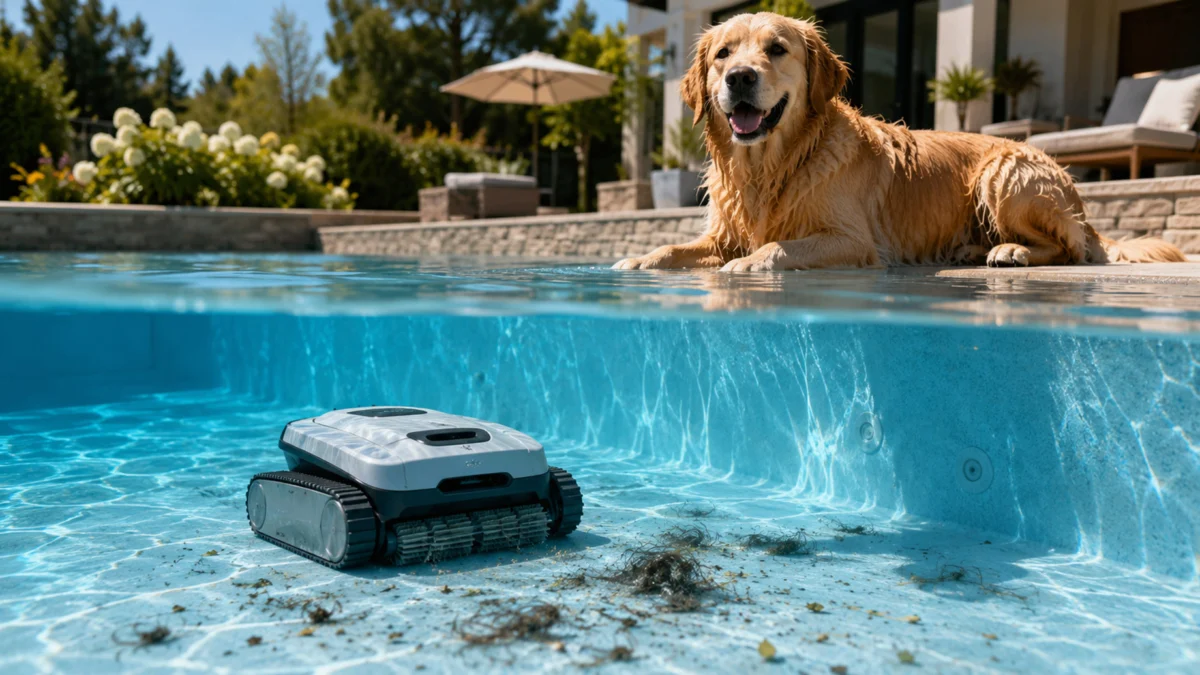
For millions of homeowners, the arrival of summer signals the opening of the backyard pool—a sanctuary for relaxation and recreation. Among the most cherished traditions of the season is including the family dog in these aquatic festivities. From athletic retrievers chasing tennis balls to spaniels paddling contentedly in the shallows, the image of a canine companion in the water is the quintessential American summer scene.
However, beneath the surface of this idyllic picture lies a significant, often misunderstood, mechanical challenge. To the average homeowner, a dog in the pool is simply a playful pet. To a professional pool technician, that same animal represents a massive, concentrated biological and physical load that can compromise the integrity of the entire filtration system. As experts in the industry point out, the contamination equivalent of a single large dog is staggering: allowing one canine to swim is roughly equivalent to hosting fifty human swimmers in terms of the organic matter and physical debris introduced into the water.
The Biological and Physical Impact of Canine Swimmers
To manage a pool effectively, one must understand exactly what a dog introduces to the aquatic environment. Unlike humans, who generally shower before entering a pool, dogs bring the entire ecosystem of the backyard into the water with them.
When a dog jumps into a pool, the immediate impact is a "shock load" of debris. A dog’s coat acts as a natural filter for the environment, trapping topsoil, lawn fertilizers, microscopic pollen, and grass clippings. Upon submersion, this trapped matter is released in a massive cloud, instantly shifting the pool’s chemistry and physical clarity.
The Chemical War: Oils and Dander
Beyond the visible debris, there is the silent, chemical threat of canine skin oils and dander. Dogs possess specialized oils designed to protect their coats from the elements. These oils are hydrophobic and, when introduced to a chlorinated environment, are stripped from the skin and dispersed throughout the water.
These oils are problematic for three primary reasons:
- Chlorine Consumption: These fats react rapidly with free chlorine, forcing the sanitizer to work overtime. This leads to a precipitous drop in chlorine levels, creating a window of opportunity for algae blooms and bacterial growth.
- Surface Tension and Scum Lines: These oils float to the surface, where they inevitably migrate to the perimeter of the pool. Over time, they create a stubborn, sticky "bathtub ring" around the waterline tiles, which is notoriously difficult to remove without harsh chemical cleaners.
- Filter Fouling: When these oils interact with the microscopic particles of hair and dirt, they create a greasy, adhesive sludge that can coat pool surfaces and filtration media.
The Hair Problem: Nature’s Concrete
The most physically damaging element is, undeniably, the fur. A dog’s coat is composed of a coarse topcoat and a dense, fine undercoat. When an animal paddles, the water’s resistance acts as a mechanical harvester, pulling thousands of loose hairs from the body. Because of the microscopic structure of these hairs, they quickly tangle and matte together, forming dense, felt-like structures that behave very differently than human hair.
Why Primary Filtration Fails Against Pet Hair
The primary circulation system of a swimming pool—comprising the skimmer, the pump, and the filter tank—is designed to handle the occasional leaf or human hair. It is not engineered to withstand the sustained, high-volume assault of canine fur. Relying on this system as your sole defense is a recipe for catastrophic mechanical failure.
The Skimmer Bypass
In a typical setup, floating hair is drawn into the skimmer baskets. However, because dog hair is so fine and lightweight, it frequently bypasses the plastic grating of the skimmer basket. Once the hair enters the underground plumbing, it is on a collision course with the circulation pump.
The Pump Impeller Crisis
The pump is the heart of the pool, and its impeller is its most vulnerable component. As the impeller spins at high speeds to move water, it creates a vortex that catches the fine, matted dog hair. The motion of the impeller twists the hair into high-tensile, restrictive "ropes." These ropes wrap around the motor shaft, creating significant friction.
This friction leads to:
- Overheating: The motor must work harder to overcome the resistance, leading to thermal overload.
- Structural Failure: The heat generated by this friction can warp the plastic housing of the pump, leading to leaks and, eventually, complete motor burnout.
The Filter Tank "Rebar" Effect
If the hair survives the pump, it reaches the filter tank. Whether the pool uses sand, diatomaceous earth (DE), or pleated cartridges, the result is the same. Dog hair acts as structural reinforcement, binding with skin oils and dirt to form a solid, impenetrable mat. This mat blinds the filter media, causing the internal pressure of the tank to spike. When the pressure reaches critical levels, circulation drops to a trickle, rendering the sanitizer distribution ineffective and inviting rapid algae growth.
Hardware Adjustments for Maximum Hair Extraction
To avoid these disasters, homeowners must adopt a strategy of "source interception." By utilizing an independent, motorized robotic pool cleaner, you can trap the debris inside the machine’s own chassis, bypassing the main filtration system entirely. However, these machines require specific optimizations to handle the unique challenges of pet hair.
Mechanical Calibration
- High-Flow Filtration Bags: If your robot uses standard mesh filters, upgrade to ultra-fine, high-flow filter canisters designed for fine debris.
- Brush Maintenance: Ensure the robot’s scrubbers are free of previous hair buildup before every cycle. If the brushes are clogged, the robot will merely push the hair around the pool floor rather than collecting it.
- Weight Distribution: Adjust the robot’s buoyancy. If the machine is too light, the force of a swimming dog can disrupt its traction, causing it to lose contact with the pool floor and skip over areas that need cleaning.
A Step-by-Step Recovery Protocol for Dog Days
Professional pool managers recommend a strict, logical recovery protocol to ensure the longevity of both your pool equipment and the water chemistry. The following sequence is the industry standard for post-swimming maintenance:
Phase 1: The Settling Period
Do not attempt to run your filtration system while the dogs are still swimming. The water turbulence prevents hair from settling and forces more debris into the skimmer lines. Once the dogs are out, allow the water to settle for at least one hour. This allows the heavy, matted hair clumps to sink to the floor, where they can be effectively collected by your robotic unit.
Phase 2: Targeted Extraction
Deploy your robotic cleaner. Ensure that the unit is programmed for a "floor-only" or "deep clean" cycle. By focusing on the floor, you are removing the hair before the main drains or skimmers have the chance to pull it into the plumbing.
Phase 3: Post-Cycle Sanitization
Once the robotic cleaner has finished, immediately inspect and clean its filter canister. Because this canister now contains high concentrations of oils and hair, it is a breeding ground for bacteria. Rinse the canister thoroughly with a high-pressure hose to prevent the buildup of odors and the growth of mold within the robot.
Phase 4: Chemical Rebalancing
After heavy canine use, test your pool water. You will likely find a dip in free chlorine and a shift in pH. Shock the pool if necessary to neutralize the organic load, and ensure your pH is balanced to prevent the aforementioned "scum line" from hardening on your tile work.
Implications for the Future of Pool Ownership
The trend toward "pet-friendly" living spaces is not slowing down. As homeowners continue to integrate their pets into every aspect of their lives, the pool industry must respond with better technology and more informed maintenance practices.
The implication for the modern pool owner is clear: you do not need to choose between your dog and your pool. However, you must move away from the assumption that the primary filter can handle the biological load of a large animal. By viewing the robotic pool cleaner not as a luxury, but as an essential piece of "pre-filtration" equipment, you can effectively isolate the mechanical threat of pet hair.
As we look toward the future, manufacturers are already experimenting with specialized "pet-mode" firmware for robotic cleaners—units that prioritize suction power and specialized bristle patterns to deal with high-volume shedding. Until those become standard, the diligent application of the protocols outlined here remains the most effective defense against the "canine conundrum," ensuring that your pool remains a source of joy for every member of the family, whether they walk on two legs or four.
 Sagoh
Sagoh
 Laily UPN
