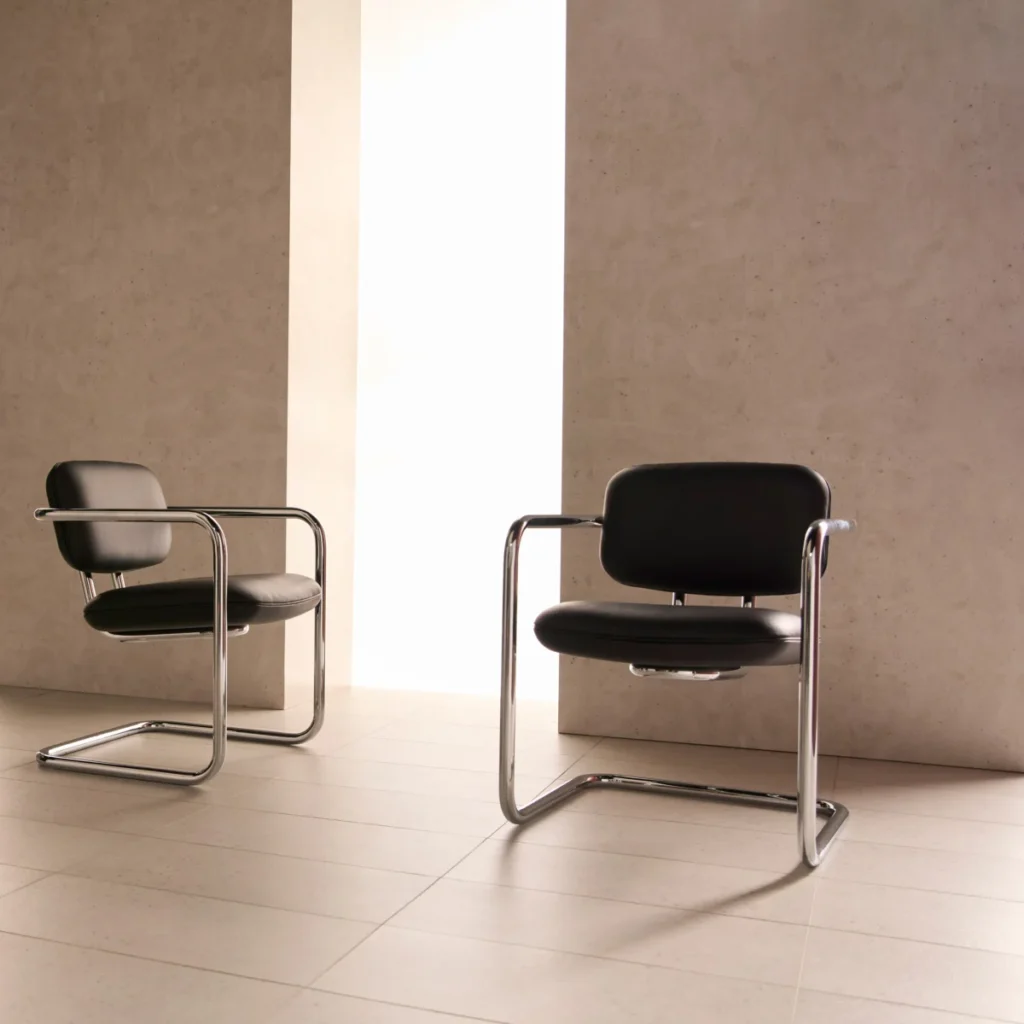
In the high-stakes world of architectural history, few concepts are as revered—and as elusive—as the "total design" philosophy. It is the ambition to control every facet of a built environment, from the structural skeleton of a skyscraper to the ergonomic curvature of a desk chair. Now, a bold new Canadian venture, Ikonstudio, is breathing life into these long-dormant concepts, officially launching inaugural collections that translate archival sketches by Skidmore, Owings & Merrill (SOM) and Louis Kahn into tangible, contemporary furniture.
Timed to coincide with the prestigious NYCxDesign and Chicago Design Week, these collections represent more than a mere aesthetic exercise; they are a bridge between the mid-century modern intellectual foundations of architecture and the manufacturing capabilities of the 21st century.
The Genesis of Ikonstudio: A Vision for Architectural Continuity
Ikonstudio was established by David Feldberg, the visionary owner of Canadian design powerhouse Teknion. Feldberg’s entry into the archival reproduction market is driven by a desire to challenge the industry’s obsession with nostalgia. For Feldberg, the goal is not to replicate the past, but to extend the lifespan of brilliant, underutilized ideas that were previously trapped in the static silence of architectural archives.
"Ikonstudio is not about revisiting the past, but extending it," Feldberg remarked during the launch. "We are drawn to architects globally who see furniture and objects as integral to a total spatial language—works that are often experimental, site-specific, and not originally designed for broad circulation. Our role is to bring these concepts forward, collaborating with archives and estates to produce them through today’s materials and technologies."

By applying modern precision to historic conceptual blueprints, Ikonstudio is effectively legitimizing furniture that was, in many cases, never realized during the architects’ lifetimes.
Chronology: From Private Commissions to Public Icons
The journey of these collections spans decades, tracing the evolution of architectural thought from the mid-20th century to the present day.
The Louis Kahn Collection: Mid-Century Modernity Realized
The Louis Kahn collection is perhaps the most significant revelation of the project. Developed in close collaboration with the late architect’s foundation and Form Portfolio—the entity managing select portions of Kahn’s intellectual property—this collection brings to life designs that were originally conceived in the 1950s.
- 1953: Louis Kahn conceptualizes furniture and textiles for the Radbill Oil Company building and the ML Weiss House.
- Mid-20th Century: Despite their conceptual brilliance, these designs remain largely unproduced, serving primarily as site-specific accents in his architectural commissions.
- 2026: Ikonstudio secures rights to produce these works, marking the first time in history that furniture by this titan of modern architecture is available for public purchase.
The SOM Collection: The Ethos of "Total Design"
The SOM Collection focuses on the firm’s legendary commitment to designing everything within a building, including the ashtrays. This collection is deeply indebted to the archival research conducted by the Philadelphia-based group Rarify, which showcased SOM’s furniture history earlier this year.

- 1970s: SOM designs the SOM79 Chair for the atelier of fashion designer Halston and the SOM79 Lounge for IBM’s World Headquarters.
- February 2026: Rarify hosts a pivotal exhibition in New York, reintroducing the design world to the furniture archive of SOM.
- May 2026: Ikonstudio formalizes the release of a "tightly edited group" of seating and tables, now refined for the modern market.
Supporting Data: The Technicality of Re-Engineering History
The transition from a historical archive to a high-end furniture retail space is a complex technical endeavor. According to Ikonstudio, the furniture is not a "reproduction" in the traditional sense; it is a collaborative re-interpretation.
Materiality and Technology
By utilizing modern manufacturing, Ikonstudio is able to correct the inherent limitations of the 1950s and 70s. For instance, the original designs, while structurally sound in theory, often lacked the refined finishes and sustainable materials available today. The new collections utilize high-grade contemporary alloys, sustainable textiles, and advanced woodworking CNC technologies to ensure that the pieces meet current commercial and residential standards for durability and comfort.
The "Total Design" Metric
The SOM collection specifically adheres to a rigid design language. The SOM79 chair, for example, features a "streamlined modern" aesthetic that was once exclusive to elite corporate environments. By releasing these for general purchase, Ikonstudio is testing the market’s appetite for "bespoke-as-a-commodity." The success of these pieces will be measured not just in sales figures, but in how seamlessly they integrate into modern homes—a stark contrast to their original, highly specific corporate settings.
Official Responses and Strategic Alliances
The launch of Ikonstudio has sent ripples through the design community, garnering support from both institutional archives and industry peers.

The Role of Rarify
The partnership with Rarify, a group renowned for its meticulous archival recovery, provides the academic weight necessary for such a high-profile launch. By outfitting the entrance of the WSA space at NYCxDesign with original chairs designed by SOM’s Charles Pfister alongside the new Ikonstudio pieces, the team is creating a "dialogue" between the vintage and the contemporary.
The Industry Perspective
Industry experts view this move as part of a growing trend in the design world. In 2024, Steelcase made headlines by releasing a series of Frank Lloyd Wright-inspired pieces, proving that the public is hungry for the "architect-designed" aesthetic. However, Ikonstudio’s approach is notably more academic, focusing on the preservation of the architect’s specific "spatial language" rather than simply slapping a famous name on a generic chair.
Implications: The Future of Architectural Heritage
The success of Ikonstudio will likely have profound implications for how architecture firms view their archives.
1. Monetizing Intellectual Property
Many architecture firms have sat on vast, unexploited intellectual property for decades. Ikonstudio’s model provides a roadmap for how these firms can generate revenue and cultural capital by curating their own historical furniture lines.

2. Redefining "Authenticity"
There is a philosophical debate brewing: does a chair designed by an architect, but manufactured 70 years later using modern technology, hold the same "authenticity" as a period-accurate reproduction? Ikonstudio argues that the concept is the soul of the work, and the material is merely the vessel. By prioritizing the intent of the architect over the limitations of the original era, they are creating a new category of "living history."
3. The Democratization of High Design
Perhaps the most significant implication is the accessibility of high-concept design. Historically, these pieces were reserved for the elite boardrooms of IBM or the private studios of legendary fashion designers. By bringing them into the public sphere, Ikonstudio is democratizing the mid-century modern aesthetic, allowing homeowners and design enthusiasts to own a piece of the architecture that shaped the modern skyline.
Conclusion: A New Chapter for the Archive
As the collections debut in Chicago’s Teknion showroom and the bustling galleries of New York, the message is clear: the history of architecture is not a closed book. Through the efforts of David Feldberg and his team, the chairs, tables, and textiles that once lived only in blueprints and archival photographs are finally coming to life.
In a design landscape often dominated by fleeting trends, Ikonstudio offers something rare: a sense of permanence and pedigree. By honoring the rigorous, totalizing vision of masters like Louis Kahn and the architects at SOM, the studio is ensuring that the "spatial language" of the 20th century remains a vibrant, functional part of our 21st-century lives. As we move forward, the question remains: which archives will be opened next, and what other hidden masterpieces are waiting to be realized? For now, the world of design watches closely, eager to see how these historic ghosts will sit in our modern spaces.